
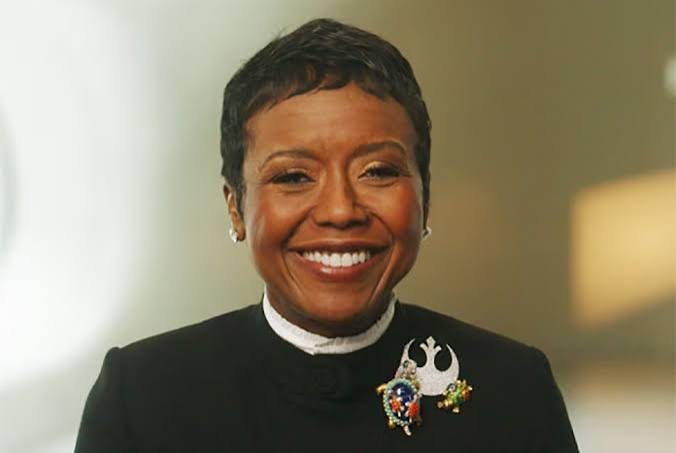
Mellody Hobson
Co-CEO · Ariel Investments · Former Chairwoman, Starbucks Corporation
A Career Built on Visibility, Access and Possibility
Some careers are defined by a title.
Mellody Hobson's is defined by the doors she has opened.
Hobson joined Ariel Investments as a college intern in 1991. More than three decades later, she serves as Co-CEO and one of the firm's largest shareholders, helping lead one of the country's leading Black-owned asset management firms, with approximately $14.5 billion in assets under management.
That journey—from intern to executive leader and owner—is remarkable on its own.
But Hobson's influence extends far beyond her role at Ariel.
She has built a career at the intersection of capital, corporate leadership, inclusion, and access, consistently challenging assumptions about who gets seen, who gets opportunity, and where value can be found.
Breaking the Boardroom Barrier
Hobson's leadership credentials extend into some of America's most recognizable corporations.
As former chairwoman of Starbucks Corporation, she became the first African-American woman to chair an S&P 500 company, following a 20-year tenure on the company's board.
She has also served on the board of JPMorgan Chase & Co. and is a co-owner of the Denver Broncos.
These aren't simply impressive positions.
They represent access to rooms where major decisions about capital, people, markets, and institutions are made.
And Hobson has consistently used that access to push conversations beyond conventional boundaries.
Capital Can Change What Becomes Possible
One of Hobson's most significant initiatives at Ariel is Project Black®, which focuses on providing capital and support to minority-owned businesses with the potential to scale.
Ariel raised $1.45 billion for its inaugural Project Black private equity fund, creating an opportunity to help minority-owned businesses become Tier 1 suppliers to Fortune 500 companies.
That matters because access to capital doesn't simply change a company's balance sheet.
It can change its visibility, capacity, relationships, and ability to compete.
A business may already have the talent and capability.
Sometimes what it lacks is access to the systems that allow that capability to be recognized and deployed at scale.
Looking Beyond the Label
This is where Hobson's career connects naturally to a conversation we explore throughout THE LOOP.
Traditional systems love labels. Job titles. Credentials. Departments. Organizational charts. Investment categories.
But labels are only proxies for capability.
Hobson's own trajectory demonstrates how limiting those proxies can be.
An intern became a co-CEO. A board member became a chair. An investor became a champion for businesses that traditional capital structures have historically overlooked.
The person—and the capability—was always more expansive than the original label suggested.
Why This Matters Inside the Enterprise
That same principle applies to today's workforce.
Organizations routinely make decisions based on the information their systems make easiest to see.
But easy to see isn't the same thing as complete.
A person's title may tell an organization what role they currently occupy. It may not tell leadership what else they know. What they have done before. What they could learn. What capabilities they have developed outside their current function. Or what opportunities they could potentially grow into.
This becomes even more important in distributed and hybrid organizations, where many of the informal interactions that once helped leaders discover talent have disappeared.
The person with the capability you need may already be inside the organization.
The question is whether your systems can help you find them.
The Economics of Seeing People Differently
This isn't simply a culture conversation. It's an economic one.
When organizations cannot see the capabilities they already possess, they may look outside for capabilities that already exist inside.
That can mean: external recruiting costs · duplicated hiring · lost institutional knowledge · unnecessary workforce disruption · slower deployment of new capabilities · missed opportunities for internal mobility.
Better visibility doesn't eliminate the need to hire externally.
It helps organizations understand when they actually need to.
That distinction matters.
The Hobson Blueprint
Across investing, corporate governance, entrepreneurship, and leadership, Hobson's career reflects a consistent idea:
Give people access to capital, opportunity, authority, and visibility—and you change what they can accomplish.
That's particularly relevant in a business environment where organizations are trying to do more with existing resources while simultaneously navigating workforce transformation.
The question isn't simply: Who do we need to hire?
It can also be: What capability do we already have? Where is it? Why isn't it visible? And what would happen if we deployed it differently?
That is the conversation THE LOOP™ is designed to advance.
Not replacing human judgment. Not reducing people to data points. But creating better visibility into the capabilities that already exist.
The Bigger Question
Mellody Hobson's career is a reminder that potential doesn't always arrive with the label we expect.
Sometimes the intern becomes the executive.
Sometimes the overlooked business becomes the supplier.
Sometimes the person sitting in one department possesses the capability another department desperately needs.
And sometimes the greatest opportunity isn't outside the organization at all.
It's hidden in plain sight.
Welcome to THE LOOP, Mellody.
How much value is your organization missing simply because it can't see what it already has?
Now You’re in THE LOOP™